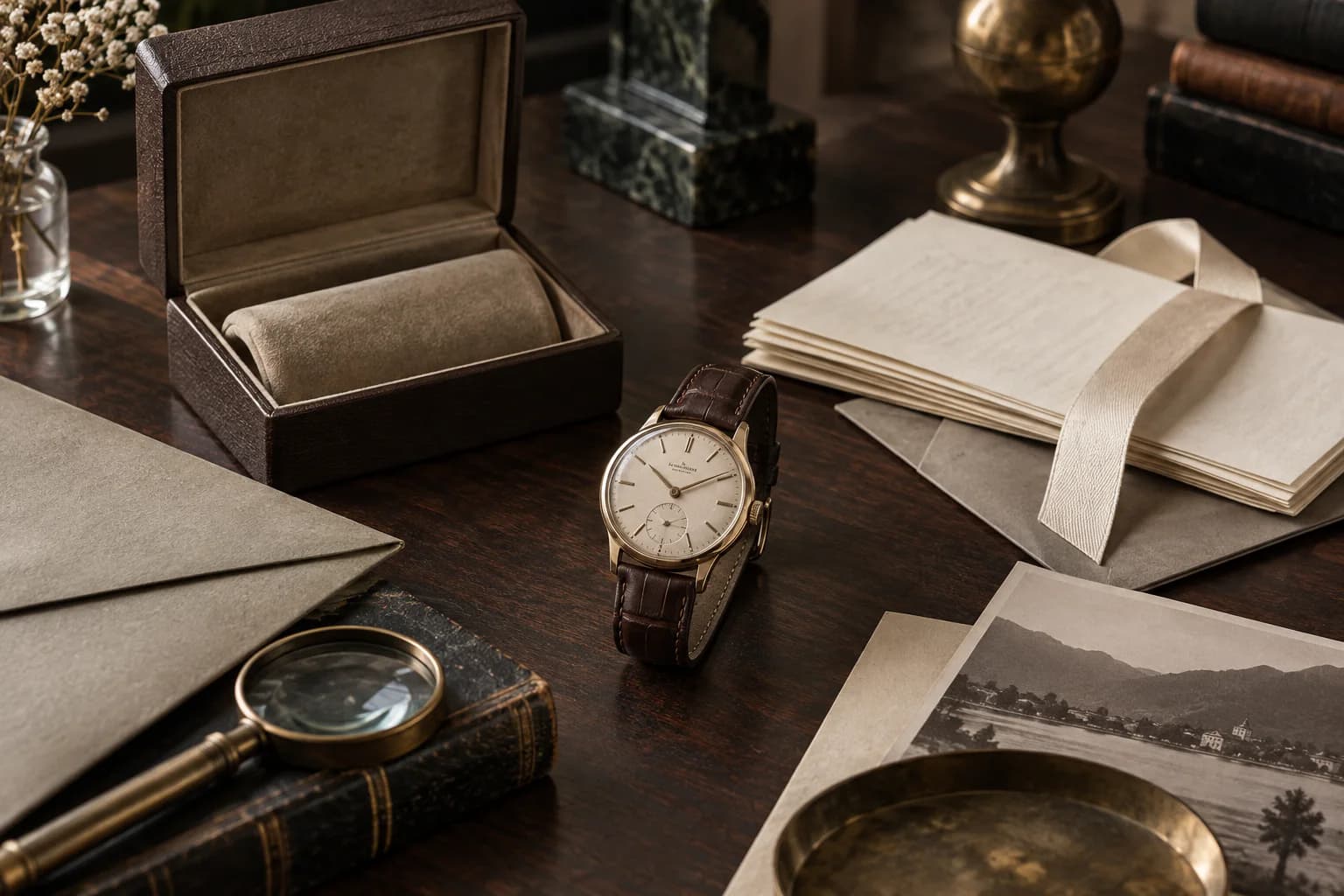
An original box and papers can increase the collector appeal of a pre-owned watch and help assemble its history. They do not, by themselves, prove that the watch is authentic, unaltered or mechanically sound. The actual watch, its condition and verifiable information remain the priority.
What “full set” usually means
The phrase commonly describes a watch with its original box and sales or guarantee papers, but it may also include manuals, tags, an invoice and spare links. Sellers use the term differently, so always request an exact inventory and photographs of everything included.
What documents can tell you
A correctly completed document may connect a reference or serial identifier to the date and place of original sale. Service invoices can build a maintenance timeline. Compare the details with the watch; inconsistencies are a reason to ask further questions, not to jump to a conclusion.
What they cannot prove
A genuine box may be paired with another watch, a document may be incomplete, and the watch may have been modified after its original sale. Accessories are therefore not a shortcut around inspecting the dial, case, movement and identifiers. Even complete documentation cannot guarantee present mechanical condition.
How they affect value
The effect depends on model, age, rarity and buyer expectations. A full set is often more desirable for a collector piece; for an everyday watch, condition and recent service may matter more. There is no universal percentage premium.
The right order for a decision
Assess the watch first, verify its history second, and then treat the accessories as part of the complete picture. A precise inventory, clear description and quality photographs are more useful than an undefined “full set” label. For an important purchase, have both the documents and watch reviewed by a qualified specialist.